She Ran Barefoot for Her Daughters: Ramabai Ranveer’s Extraordinary Victory
In a race filled with younger participants, one woman arrived in a sari and a pair of ordinary slippers. She was not a professional athlete. She had not spent months preparing for a medal. She was a mother looking for a way to help pay for her daughters' education.
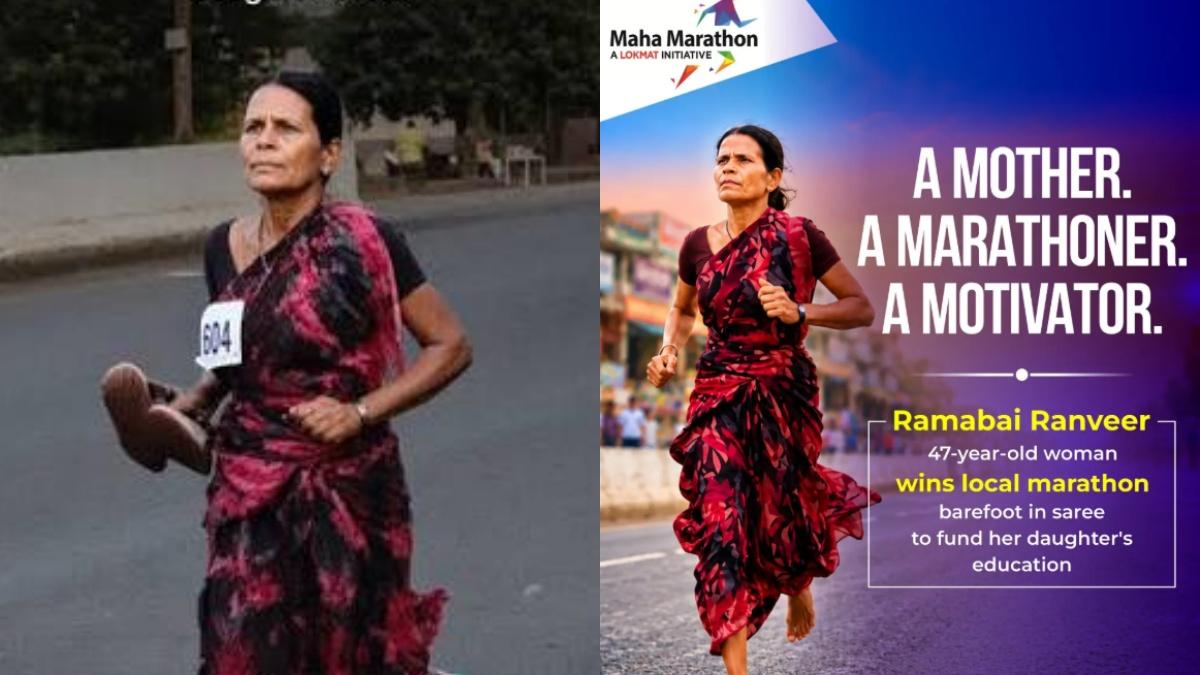
In August 2026, Ramabai Ranveer, a 47-year-old cook from Ambajogai in Maharashtra's Beed district, entered a local running event known as Amrut Daud. What happened next made her an unlikely symbol of determination: she removed her slippers, ran barefoot and won.
A race that meant more than sport
Ramabai had experienced years of financial pressure while supporting her family. News reports describe her as a widow working as a cook, including at a local training establishment linked to her elder daughter's ambitions. The money promised to the race winner mattered to her not as a trophy but as help with educational expenses.
Several reports put the prize at ₹3,000, an amount that can seem modest from a distance but may make a practical difference to a household managing fees, transport and study materials. The Indian Express and other newspapers reported on her struggle to support her daughters' education and training.
Her story is striking precisely because she did not arrive with the advantages normally associated with competitive running: specialist footwear, coaching or even suitable athletic clothing.
The moment she left her slippers behind
The event began with Ramabai running in a sari and slippers. Accounts describe her taking the slippers off as they made running difficult, then continuing barefoot. A video of the unusual run circulated widely after she finished ahead of the field.
It is often called a “marathon” in headlines, but it was a short local race, not a regulation 42.195-kilometre marathon. Reports differ on whether the course was two or three kilometres; several early accounts described it as three kilometres. Likewise, most reports cite a ₹3,000 prize, while at least one newspaper reported ₹5,000. These inconsistencies do not change the central, well-documented fact that she won the race barefoot.
What happened after the victory?
The footage drew national attention. Newspapers reported offers of financial assistance and recognition for Ramabai and her daughters. By early September, the story had developed from a local sporting surprise into a wider discussion about the obstacles families face when financing education.
Yet a viral moment should not obscure the situation that produced it. A parent should not have to win a race to keep a child's educational hopes alive. Her victory is inspiring; the financial vulnerability behind it deserves equal attention.
What makes the story extraordinary
| What audiences saw | What the story also reveals |
|---|---|
| A barefoot woman winning a race in a sari | The resourcefulness of someone without specialised training or equipment |
| A small cash prize | The importance of education costs in a financially stretched household |
| A viral moment of celebration | The power—and limitations—of public attention and charitable help |
| A mother's determination | The need for reliable, long-term support for students and families |
It would be easy to turn Ramabai into a simplified symbol of limitless willpower. That would miss something important: she showed extraordinary effort, but she also faced circumstances that should not depend on extraordinary effort to overcome.
The lasting lesson
Ramabai Ranveer's story belongs in a collection of remarkable Indian lives because it combines an improbable image with an intensely ordinary hope. She did not run for fame. She ran for an opportunity to help her children move forward.
The finish line gave her a victory. The larger question is how many parents are still quietly running their own exhausting races just to keep education within reach.
Sources and reporting notes
- ThePrint / PTI, 31 August 2026 — local race and background
- The Indian Express, 2 September 2026 — family and educational circumstances
- Hindustan Times, 5 September 2026 — support after the race
- Times of India, 1 September 2026 — differing prize report
Editorial note: The featured illustration is AI-generated and is not a documentary photograph of Ramabai or the race.